
Zara Ahsan: 'Connecting climate issues to community is something that everyone can do'
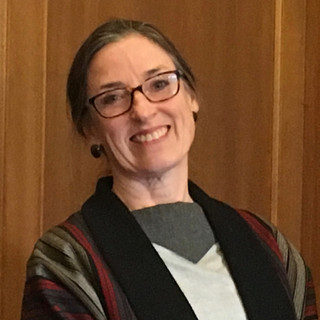

Photo: Zara Ahsan.
Zara Ahsan is a student at UCLA with experience in climate policy and community organizing. She's originally from Oakland, where she worked as a Campaign Coordinator for Youth vs. Apocalypse's Divest CalSTRS campaign.
CJ: Do you want to start by just telling me about yourself?
ZARA: Sure! My name is Zara Ahsan. I use she/her pronouns. Right now, I’m a college student at UCLA. I grew up in Oakland, and for a lot of it, I was a community organizer. I started with Youth vs. Apocalypse in the climate action sphere, but was also really involved in the Oakland schools and funding for OUSD.
CJ: Cool! So how did you first become interested in climate action, or Youth vs. Apocalypse?
ZARA: Pizza! [laughs] So YvA (Youth vs. Apocalypse) comes to different schools throughout Oakland and they provide pizza and talk about climate action and get you interested. It just was such a welcoming community that really felt specific to Skyline. I went with a group of my friends and we had lunch and talked about different climate issues and different projects that YvA was working on, and it was a really nice, gentle introduction to climate activism that really felt centered around community rather than jumping right in and trying to save the world or whatever.
CJ: Definitely. So since you got started, can you talk a little bit about your climate action journey or the things you've done to try and fight climate change?
ZARA: Sure! So with YvA, I was part of this community of climate activists. I would go to actions, I got more involved and really started working with the CalSTRS divest campaign. Eventually I became a campaign coordinator, which is like a campaign leader for this project to get the state of California to divest its money from fossil fuels. This was mostly through a bill called, alternatively, SB 1173 and SB 252, which would mandate that CalSTRS and CalPERS, the pension funds for California public teachers and workers, respectively, would divest the billions of dollars that they had invested in fossil fuel companies like Exxon and Chevron, etc. I led a group of young people who worked on this campaign, and we sat as part of the legislative body that would see this bill. We worked with Senator Lena Gonzalez on the language of the bill and campaigning for it, and we did a lot of lobbying and advocacy to get both individual people as well as interest groups like the California Teachers Association, who have a lot of power in something like this, to support.
CJ: That's cool. I'm curious about the day to day of coordinating a campaign — what are the tasks associated with that, or what are you doing?
ZARA: So I must add that I stepped out of being a campaign coordinator when I graduated from high school about a year ago — but it was a lot of fun! It was also a lot of work. I would usually have a meeting in the morning with a larger set of organizers; it was often a very intergenerational group. So I would do these legislative coalition meetings and they would have people from Third Act, Fossil Free California, and a bunch of different groups representing a bunch of different people who all wanted to work on this bill. And then I would work on some projects, emails throughout the day — usually there was a speaking event or an outreach email or some miscellaneous writing that had to be done, as well as planning agendas for other meetings. And then I'd have a couple of meetings in the evening. But also, our whole group (the YvA CalSTRS coalition) would go down to LA every couple of months for the California Teachers Association (CTA) meetings, and we would really work with them to try and get their support. That was always really fun because obviously we have these amazing opportunities to try and fight for our bill, but also we got to hang out in LA. It was a chance for us to really be in community with each other because we're usually a virtual campaign, which is fun and amazing — but it was really nice to just hang out and see all the people that you've met and really work with them and get to know them as organizers. There's a bunch of miscellaneous other things, but I would say that's the day-to-day: a couple of meetings, some emails, kind of the basic organizing bread and butter.

Photo: Zara Ahsan.
CJ: Yeah, definitely. I think I remember going with you guys on one of the LA beach trips and it was so fun! It was cute too because I feel like people talk about climate spaces like they’re very doom and gloom. And I'm like, no, people are literally just, like, laughing all day.
ZARA: Yeah!
CJ: So what, to you, would you say are the best and the worst parts of taking climate action and being involved in all this work?
ZARA: Well, I think the best part and the worst part are kind of similar, which is that you are exposed to a lot of scary information about the world. Like in an argument you have to say, “This amount of fossil fuel emissions will lead to this in 10, 20 years,” and that's 10, 20 years from now when I'm going to be in my 20s, in my 30s. I'm going to want to buy a house. It is scary to have to confront the reality of what you're fighting against. But I also would say that I felt that fear a lot before I started doing climate activism and climate organizing, and doing organizing was one of the things that brought me comfort against this climate anxiety because I'm doing my little part on my little bill in this small corner of the world. But I also know that the same joy and community that it brings me, it brings other people who are working on their own little projects in their own parts of the world. And through that, we will make progress and we will make change.
CJ: Absolutely. You’ve touched on this briefly, but who or what inspires you when you're having a hard day getting motivated?
ZARA: Well, I worked on CalSTRS with my day one best friend and teammate, and that was a really nice experience to have — not just her, but friends in general who I worked with who I could not only respect as intelligent colleagues who could really help with this campaign, but also just to have joyful moments with and make organizing feel like a community-centered project rather than a task. I think just seeing those other young people around me really inspired me because most of the people I worked with were in high school, and now all of them are off doing various post-high school things. It's just so inspiring to see my community grow and evolve — and sad, because we're no longer the CalSTRS team! — but grow and evolve and do such amazing things. And I know that they’re such joyful, intelligent, passionate people.
CJ: That's so sweet! I love that. So why do you think it's important for people in the Bay Area specifically to do something about climate change?
ZARA: Hmm. Well, there's two answers. One is that we are really impacted. East Bay, Oakland is a very poor city and a lot of people are going to feel the impacts of climate change first. The organizing from YvA and through Oakland schools has always been based on the principle that we, the people on the front lines, should have the biggest voice when it comes to climate change. I think that's historically not represented where, you know, when you think of the climate movement, you think of older people, whiter people, richer people who are talking about things that don't feel super relevant. Like, electric cars don't feel super relevant to a bunch of people because that's not a possibility. And to be told that you're damaging the world because you have a gas car — that's not a helpful thing if an electric car isn’t a possibility. Also, in the Bay we're by the water. We are on the front lines of the climate catastrophe. Crazy housing prices, it’s all endemic of the same root issue of the world becoming more unstable and the climate becoming more unstable. And the second answer, I would say that the Bay Area does have this reputation of being super woke, super climate-friendly, super together on this stuff. I would disagree that everyone is super aligned in the Bay on climate stuff, but I think it is our responsibility to show that behind all this passion, this reputation of being a green, climate-friendly place, we actually do stuff. Because I think a lot of the climate movement can feel preachy and not super connected to what other people are going through. An organization like YvA really roots in connecting struggles — connecting the climate struggle to racism, connecting it to the fight in Palestine — so we really need to demonstrate that that's what the Bay is about. Having real grassroots change from here is so inspiring to see. There are so many cool projects going on in the Bay and I just hope we keep it up!
CJ: Yeah, absolutely. I’m curious about how you think people can contribute to the climate movement here if they have limited time, money, energy — you know, the government's collapsing, everyone's stressed out. What are the concrete steps that people can take?
ZARA: Well, I think incorporating some form of action into your communities. It doesn't have to be, like, you join, become a climate organizer, put in 20 hours a week, whatever. But my personal philosophy of change is that it's based in community, and introducing certain issues and conversations to a community you're already a part of can do so much. Like, introducing certain conversations about my high school and the land we were located on takes advantage of an already existing community and is able to mobilize people who will care about this certain issue and do something about it. Like if you say to your five friends, “The world's ending, let's do something about it!” — that might work. It might. But if you say, “Our old elementary school is being shut down because it's too close to the waterline,” that is an issue based in community that can have a big impact if you bring that to the right people who care. There's a lot of concern about climate nihilism, but I think that's just because people are thinking that the scope is too big. People still have spaces and communities and experiences that they really care about, and if you tap into those and really bring out the want for people to work together for a better world, that doesn't have to be a big project. That doesn't have to be your entire life. But just introducing climate discussions to your communities that you're a part of — even like, “Hey, why don't we all go to this action on Saturday and then we'll get drinks after?” — in small ways, connecting climate issues to community is something that everyone can do. And it just feels better!

Photo: Zara Ahsan.
CJ: Yeah, and making it fun, too! Like, it doesn't have to be like such a drag.
ZARA: It doesn't have to be doom and gloom, yeah.
CJ: Do you have any advice for people that are stuck in that place of climate nihilism, climate anxiety, like they feel like there's nothing they can do?
ZARA: Yes! Find a cool project. Find a cool organization that's doing something. Write them an email and say, hey, can I help? Speaking as someone who’s been on the receiving end of so many of these emails, and on the sending end of so many of these recruitment emails: we want your help! We want to engage with you. So many organizations and projects are always looking for people who are passionate, and — that's it! If you care, that is already so much. So that's the first part: it's so easy to join and help out and become a part of a project that you think is cool. And the second part is, it just makes you feel so much better. Like I said earlier, just knowing that I've got my little thing in my project in my tiny spot in the world gives you so much hope that other people have that too. When you're not doing anything, it feels so much more stressful and scary and like things can't change. No matter how small the thing that you're doing is, just looking at it in the face always makes you feel better and is always going to defeat that sense of nihilism.
CJ: Yeah, absolutely. I feel like when you're isolated, it's so easy to get stuck in these feelings.
ZARA: Exactly!
CJ: And then you talk to other people and you're like, “Oh, actually, like a lot of people feel this way. Like, I'm not by myself.”
ZARA: It will never be worse to sit in a community that you love talking about a really scary issue than, like, doom scrolling on Instagram —
CJ: That's so real! [laughs]
ZARA: — alone in your room, viewing this really scary issue. That will never be the better way to experience the climate crisis.
CJ: Oh, yeah, absolutely. Do you have any memories or special moments from climate wins that you'd like to share?
ZARA: Oh, God, I have so many. The first CTA trip I went on, which I think you might have been on — we moved the CTA from an ‘opposed’ position on the bill to a ‘watch.’ It doesn't sound like much (a ‘watch’ is a neutral position) but that had been such a set-in-stone position for the CTA, which is a large bureaucratic organization that's very status quo. It had been kind of a nonstarter that they did not mess with the bill, they were not ever going to support — and they moved it to a ‘watch.’ That felt really, really big because behind that watch position were the conversations we'd been having all weekend like, “Oh, I've never thought about it that way. Thanks, I'll look into that,” or, “That sounds really dope. I'll check out your guys' project.” There had been so many little conversations with teachers that had pushed them to think a little differently about divestment or just push the conversation a little farther. To see that culminated in this reaction from the CTA had been really cool. I mean, there are some others; we've had a bunch of really powerful actions, not specifically on CalSTRS divest, but through YvA in general. There's always a certain — how do I describe it? — electricity that comes from being at an action with so many people who are all there for the same reason. We passed the bill through the Senate twice, which always felt amazing whenever we got that news. We have gotten some pretty important allies and supporters, which has always been amazing.

Photo: Zara Ahsan.
CJ: Do you remember celebrating any of these wins with people?
ZARA: Yes! I remember driving back to Oakland from LA after this move to a watch position. We were all just shouting in the car and, I don't know, it was just so amazing. It was a car full of kids who were exhausted from working all weekend on lobbying and then we finally, finally heard that we did something in this huge institution that is so slow moving and bureaucratic and finicky — and it did something. So often our frustration with the CTA is that it does nothing, even if it wants to, and it was such an amazing experience. I remember when me and Kiana, my best friend, who was also a CalSTRS coordinator, heard about SB252 getting passed the Senate. We were driving home from track practice. We got boba on the way and we just opened our phones and got a text from Miriam like, “Did you hear SB252 passed the Senate?” And we had a little moment of celebration in the car which was just ours. I remember all those moments super fondly.
CJ: Aw, that's so sweet. It sounds really special.
ZARA: Yeah!
CJ: Is there anything else that you want people to know, or any advice that you have?
ZARA: If you think a project is cool and you want to do something, just email them. They probably want you to reach out or start your own thing like that. We need more people who will start their own things. My takeaway is if you have this deep-seated climate anxiety and nihilistic view whenever you try and look at the climate crisis too directly in the face, it will always feel better to be in community trying to address these issues — even if you fail, even if it takes a while — than it does to deal with it alone.

Comments